In this guide
Most engineering certificates for street cars land somewhere between $400 and $4,000, and the spread comes down to one thing: how much the engineer has to check and test. A single brake upgrade is a morning's work. A turbo conversion on a car that needs emissions evidence can turn into a multi-visit project.
None of the state authorities set these fees. VicRoads says it doesn't regulate signatory fees, and Transport for NSW says inspection and certification fees are negotiated between certifier and customer. So the figures below are typical ballpark ranges as of 2026, not price lists.
Quick answer: Ballpark 2026 pricing: $400 to $1,000 for a simple single-item cert, $600 to $1,500 for suspension work, $1,500 to $4,000+ for an engine swap or turbo conversion, and more again for major builds. Emissions testing, rework and extra inspections are usually on top. Talking to the engineer before you build is the single best way to keep it down.
Typical engineering costs by job (2026 ballpark)
| Modification | Typical cost (AUD) | What drives it |
|---|---|---|
| Aftermarket seats or harness setup | $400 – $1,000 | Mounting method, number of seats |
| Rollcage | $500 – $1,200 | Design, welding quality, documentation |
| Brake upgrade (non-factory calipers) | $400 – $1,000 | Brake testing, proportioning changes |
| Suspension change or airbag setup | $600 – $1,500 | Geometry checks, ride height testing |
| Engine swap (non-factory engine) | $1,500 – $4,000+ | Mounts, brakes, driveline, emissions |
| Turbo or supercharger conversion | $1,500 – $4,000+ | Power increase, brakes, emissions evidence |
| Multi-system builds, ICVs, street rods | $4,000 – $10,000+ | Number of codes, testing, stage inspections |
| Emissions testing (if required) | Often well over $1,000 | Test type and facility |
Treat those as ballpark figures. Metro versus regional, mobile versus workshop, and how busy the engineer is will all move them.
The regulated fees around engineering
The engineer's fee is the big one, but there are inspection and rego fees either side of it. These are set or capped by the states:
| State | Fee | Amount |
|---|---|---|
| NSW | Pink slip (safety check), light vehicle | Up to $52 |
| NSW | Blue slip (AUVIS), light vehicle | Up to $82 |
| QLD | Safety certificate, vehicle up to 4,500kg | Up to $102.70 (1 July 2026) |
| QLD | TMR plan review/approval, up to 4,500kg | $110.10 (1 July 2025), up 3.4% from 1 July 2026 |
| VIC | Roadworthy certificate | Not fixed; varies with car's age, type and condition |
NSW figures are the maximums listed by Transport for NSW for 2026. A blue slip is only needed in certain situations, such as a significant change like a new engine. The TMR approval fee only applies to modifications that need TMR's own approval rather than an approved person.
What pushes the price up
Testing. Brake tests, lane change tests, noise tests and emissions evidence are where costs climb. VSB 14 has separate test procedure codes for lane change, exhaust emissions and noise testing, and not every engineer can run them in-house.
Number of systems. A turbo conversion isn't one code. It can mean engine, brakes and sometimes suspension. Each adds checks.
Poor documentation. Engineers want part numbers, specs, receipts and photos of hidden work. If they have to chase it, you're paying for their time.
Stage inspections. Some jobs need a look before things get covered up. NSW's guidance notes certifiers may ask for photos or inspections at different stages. Miss that and you might be pulling the car apart again.
Fails and rework. A re-inspection costs money. A fail on brakes or clearance can also mean parts you didn't budget for.
Travel. Mobile engineers charge for the drive, and regional areas have fewer signatories to choose from.
How to keep the bill down
- Call before you build. Every state's guidance says this. Ten minutes on the phone can save you buying parts that won't pass.
- Pick the right engineer. Signatories and certifiers are licensed for specific modification types. Someone who does engine work every week will be faster and cheaper on a turbo job than a generalist.
- Hand over a complete file. Parts list, dyno sheet, receipts, photos of welds and mounts.
- Bundle the work. Certifying several mods in one go is usually cheaper than coming back three times.
- Fix the basics first. Worn tyres, leaks and dodgy wiring make a bad first impression and can mean a fail.
- Get the quote in writing, including what happens if testing is needed.
A worked example (ballpark only)
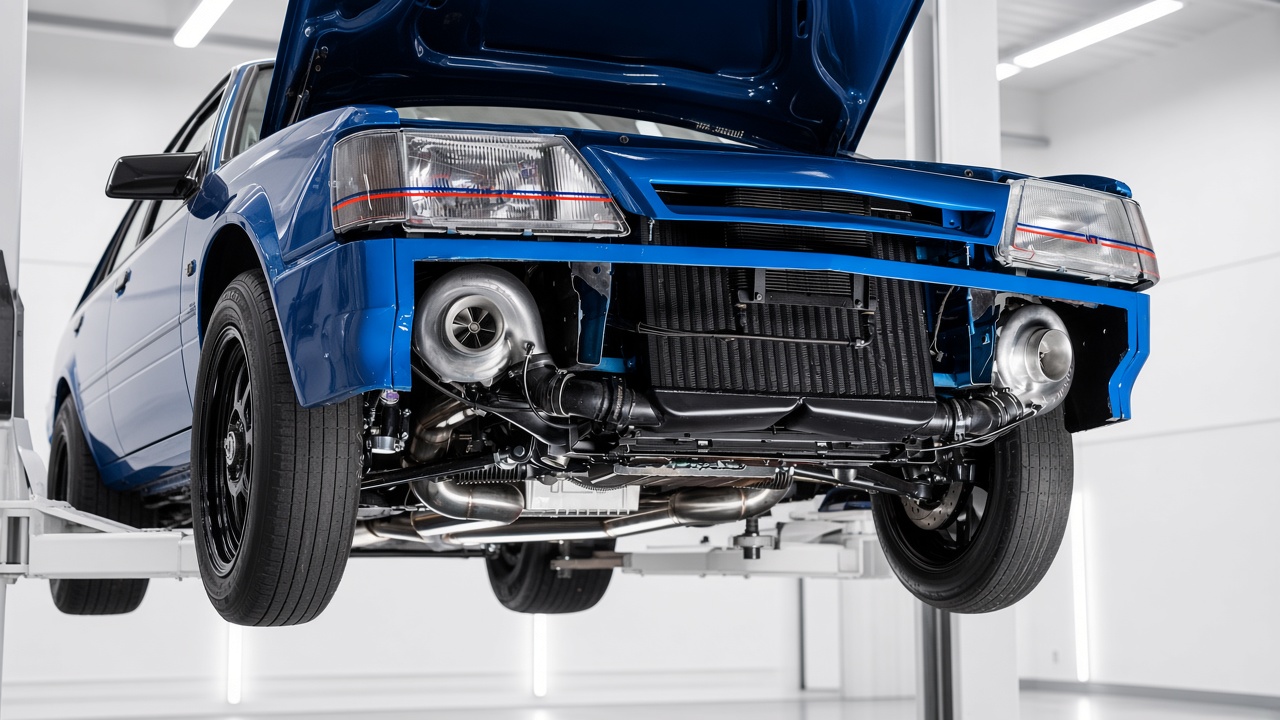
Say you're turbocharging a naturally aspirated six in a 1990s sedan, in Victoria or NSW. The engineering side of the budget might look like this:
- Initial consult and parts review: often included in the quote, sometimes charged separately
- Engineering certificate for the turbo conversion: $1,500 to $4,000+
- Brake upgrade to suit the extra power: parts on top, plus the engineer checking it
- Emissions evidence, if the engineer needs it: potentially well over $1,000
- Re-inspection if something fails: extra
- Notifying the registration authority and, in some cases, an inspection: small by comparison
That's why two people with "the same" turbo build can get quotes thousands apart. One turned up with a complete file, factory cats in place and an upgraded brake package already fitted. The other turned up with a box of receipts and a cat delete. Our cost to turbo an LS breakdown shows how the build itself adds up.
Is it worth it?
Put the cost next to what's at stake. An unengineered car can be defected, refused rego, knocked back by insurers after a crash, and is harder to sell. A car with proper certification is easier to insure and easier to sell, and buyers who know what they're looking at pay more for it. See Do Mods Add Value or Kill It? for how paperwork affects resale.
State-by-state process
Costs are only half the story. How the process works where you live:
- Getting Your Modified Car Engineered in Victoria
- Getting Your Modified Car Engineered in NSW
- Getting Your Modified Car Certified in Queensland
Not sure your mod even needs it? Start with What Car Mods Need Engineering in Australia.
Find an engineer
Compare a few quotes from engineers who do your type of work. Browse engineering workshops by state.
Selling a car with the engineering already done? That paperwork is worth money. List it free on Horsepower House and put the certificate front and centre.
List your car free. Never expires.
List your carSources
- Transport Victoria, VASS approval certificate (fees not regulated by VicRoads): https://transport.vic.gov.au/road-and-active-transport/registration-and-licensing/registration/standard-and-non-standard-vehicle-information/modified-and-non-standard-vehicles/vass-approval-certificate
- Transport for NSW, Vehicle Safety Compliance Certification Scheme (fees negotiated): https://www.transport.nsw.gov.au/operations/roads-and-waterways/business-and-industry/vehicle-examiners-certifiers-assessors/vehicle
- NSW Government, Modified and non-standard vehicles: https://www.nsw.gov.au/driving-boating-and-transport/vehicle-registration/how-to-register/registering-a-used-or-secondhand-vehicle/modified-and-non-standard-vehicles
- NSW Government, Vehicle safety check and inspection fees: https://www.nsw.gov.au/driving-boating-and-transport/vehicle-registration/fees-concessions-and-forms/vehicle-safety-check-and-inspection-fees
- NSW Government, Safety checks and vehicle inspections: https://www.nsw.gov.au/driving-boating-and-transport/vehicle-registration/renewing-vehicle-registration/safety-checks-and-vehicle-inspections
- Queensland Government, Safety certificates: https://www.qld.gov.au/transport/registration/roadworthy
- TMR, Vehicle modifications (approval fees): https://www.tmr.qld.gov.au/Safety/Vehicle-standards-and-safety/Vehicle-modifications
- Transport Victoria, Roadworthy certificate: https://transport.vic.gov.au/registration-and-licensing/registration/roadworthy-certification/roadworthy-certificate
- VSB 14 Section LA (engine), via TMR: https://www.tmr.qld.gov.au/-/media/Safety/Vehicle-standards-and-modifications/Vehicle-modifications/Light-vehicle-modifications/NCOP/4sectionlaengine.pdf?la=en
Frequently asked questions
How much does an engineering certificate cost in Australia?
Fees aren't set by VicRoads or Transport for NSW; they're negotiated with the engineer. As a 2026 ballpark, simple single-item certificates often run $400 to $1,000 and engine swaps or turbo conversions commonly cost $1,500 to $4,000 or more.
Why do engineering quotes vary so much?
The price depends on how many systems are touched, whether testing like brake, emissions or noise tests is needed, travel, stage inspections, and whether the car passes first time. Poor documentation adds hours.
Is emissions testing included in an engineering certificate?
Usually not. If your modification affects emissions and needs test evidence, that's typically a separate cost, often well over $1,000 depending on the test and facility.
Can I get a quote before the engineer sees the car?
You can get a rough idea, but VicRoads notes a signatory may not be able to quote on first contact because they need to review your details. A detailed parts list and photos gets you a better estimate.
Do engineering certificates expire?
In NSW, VSCCS certificates don't expire. In Victoria, light vehicle VASS certificates are valid for 30 days from issue for the registration step. Further modifications can make any certificate invalid.