In this guide
The short version: if a mod changes how the car goes, stops, steers or pollutes beyond the factory envelope, it probably needs engineering. Bolt-on accessories and like-for-like parts usually don't. The detail is in the numbers, and they're more generous than most people think.
Australia's baseline is VSB 14, the National Code of Practice for Light Vehicle Construction and Modification. Each state adopts it with its own variations, so the figures below are the national starting point, then we flag where Victoria, NSW and Queensland add their own rules.
Quick answer: Engineering is generally needed for power increases over 20%, non-factory turbos or superchargers, engine swaps outside the factory range, brake system changes, suspension design changes or lowering beyond the basic limits, airbag suspension (in Victoria), seats and cages, and anything touching emissions controls. Usually no engineering for like-for-like parts, accessories like tow bars and roof racks, mild lowering within limits, and wheels and tyres inside the size rules.
Engines and power
VSB 14 basic limits: you can fit a new, used or reconditioned replacement engine, a manufacturer's optional engine, or an equivalent engine with up to 20% more power than original without certification. Modify the engine itself and it falls under an LA code.
The LA codes:
- LA1: equivalent engine, not more than 20% more mass and/or power
- LA2: performance engine, more than 20% more mass and/or power
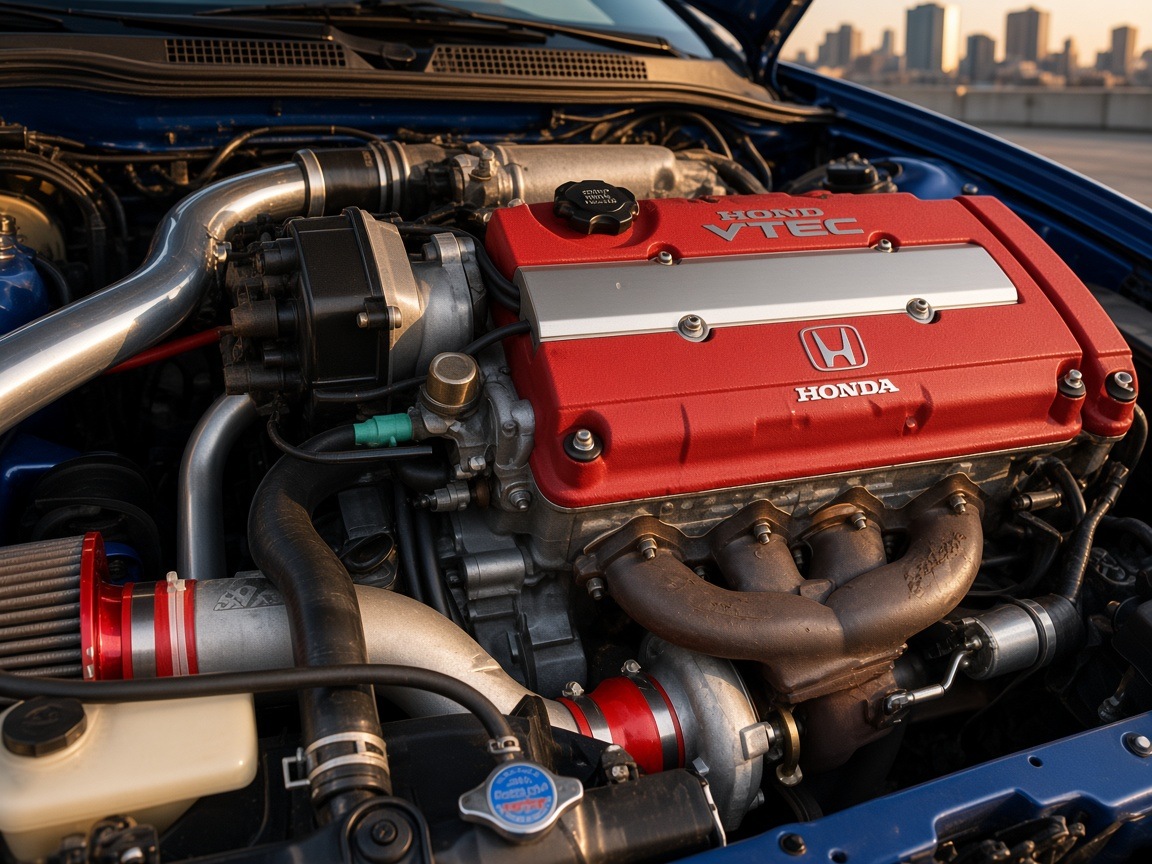
- LA3: turbo or supercharger not offered by the manufacturer
- LA4: modifications to the original engine
LA2 and LA3 require the car to be upgraded to suit the extra performance. On older cars that can mean dual-circuit brakes and a collapsible steering column.
State notes:
- Victoria: power increases over 20% need a VASS certificate. Pre-1986 passenger and off-road vehicles can't have significant performance mods without one. Nitrous injection must not be fitted.
- NSW: VSI 06 (revision 3; Transport for NSW issued a revised sheet in 2026, so check the current one) says a non-factory turbo or supercharger, or more than 20% extra output, needs certification. Its example: a 100kW car taken past 120kW.
- Queensland: engine upgrades are complex modifications needing an approved person, with Queensland variations to the national engine code.
A tune on its own can count. NSW lists replacing the ECU among emissions-affecting mods that need certification, and VSB 14 says an aftermarket ECU doesn't guarantee emissions compliance. For a deeper look at swaps, see LS Swaps: How to Make an Engine Swap Legal in Australia.
Suspension and lowering
VSB 14 basic limits for passenger cars:
- Total height change of no more than 50mm from all modifications, without certification
- Lowering must not exceed one third of original suspension travel, front and rear lowered by the same amount
- At least 100mm ground clearance within 1 metre of an axle
- ESC cars must still meet ground clearance and suspension requirements
Changing suspension design, substituting struts or uprights, or swapping a rear axle needs an LS code.
State notes:
- Victoria: airbag suspension needs a VASS certificate, must keep two thirds of original travel, and must keep 100mm running clearance at every selectable height.
- NSW: VSI 06 requires certification for ride height changes of more than one third of suspension travel.
Full detail in Lowered Car Laws in Australia: How Low Is Legal?
Wheels and tyres
VSB 14 limits for passenger cars:
| Rule | Limit |
|---|---|
| Overall tyre diameter | No more than 15mm larger or 26mm smaller than the manufacturer's tyre |
| Track | No more than 25mm wider than the manufacturer's maximum (about 12.5mm offset change per side) |
| Rim width | Within the recommendation for the tyre fitted |
| Front vs rear aspect ratio | Differ by no more than 10 |
| Load rating | Not below the placard |
| Speed rating | At least 180km/h (S) where the placard requires more than S, otherwise at least 120km/h |
Every wheel on an axle must match in diameter, offset, width and mounting. NSW's VSI 06 also requires certification for rims more than 25mm wider than the manufacturer's widest option.
Brakes
Brake changes are where people get caught. NSW requires certification for disc or drum brakes not offered as a factory option, non-equivalent calipers or master cylinders, modified or removed proportioning valves, and relocated pedals. Nationally, modified brake systems are certified under LG codes. Pads and rotors to factory spec are service parts and don't need engineering.
Exhausts
NSW's VSI 06 says aftermarket exhausts that keep the original or equivalent emission control equipment don't need certification on emissions grounds. Victoria says factory cats, sensors and particulate filters must stay in place and work, the exhaust must not let gases into the cabin, and extractors on cars built after July 1976 need a VASS certificate or acceptable manufacturer evidence. Noise is a separate test. See Exhaust Noise Limits in Australia by State.
Seats, cages and body
Aftermarket seats, extra seats and seatbelts, and rollcages generally need certification (Victoria lists internal rollcages specifically). Body and chassis changes like wheelbase mods, roof chops and LHD to RHD conversions all need engineering.
What usually doesn't need engineering
- Like-for-like replacement parts and service items
- Manufacturer options fitted to spec
- Tow bars, roof racks, mudflaps, bull bars to the relevant standard
- Driving and fog lamps fitted correctly
- Gas shocks that keep the original ride attitude
- Uprated springs, sway bars and shocks that meet or exceed original spec (NSW)
- Lowering, wheels and tyres within the limits above
How to check before you buy parts
Ten minutes of homework saves a lot of money:
- Read the part's paperwork. Reputable suspension, brake and turbo kits often say whether they're designed to meet VSB 14 or come with test evidence. Engineers like that.
- Measure before you modify. Write down standard ride height (wheel centre to guard), tyre size, track and power. You can't prove you stayed within 50mm or 20% if you don't know where you started.
- Check the placard. Tyre load and speed ratings are judged against it.
- Know your car's ADR year. Emissions and safety requirements depend on when the car was built, and older cars have their own performance rules in Victoria.
- Ring an engineer with a parts list. They'll tell you which codes apply and what supporting upgrades to plan for.
Costs for the sign-off itself are covered in How Much Does an Engineering Certificate Cost in 2026?
The rule that matters most
Talk to an engineer or signatory before you build. Every state's authority says it, and it's the cheapest advice you'll get. How the process works locally: Victoria, NSW, Queensland. Other states and territories have their own variations, so check with your registration authority.
Sources
- Department of Infrastructure, VSB 14: https://infrastructure.gov.au/infrastructure-transport-vehicles/vehicles/vehicle-design-regulation/rvs/bulletins/ncop
- VSB 14 Section LS (tyres, rims, suspension, steering): https://www.infrastructure.gov.au/sites/default/files/migrated/vehicles/vehicle_regulation/bulletin/files/NCOP11_Section_LS_Tyres_Suspension_Steering_Nov_2015_v4.pdf
- VSB 14 Section LA (engine), via TMR: https://www.tmr.qld.gov.au/-/media/Safety/Vehicle-standards-and-modifications/Vehicle-modifications/Light-vehicle-modifications/NCOP/4sectionlaengine.pdf?la=en
- Transport Victoria, VSI 8 Guide to modifications: https://transport.vic.gov.au/registration-and-licensing/registration/standard-and-non-standard-vehicle-information/vehicle-standards-information/guide-to-modification-for-motor-vehicles
- Transport Victoria, VASS approval certificate: https://transport.vic.gov.au/road-and-active-transport/registration-and-licensing/registration/standard-and-non-standard-vehicle-information/modified-and-non-standard-vehicles/vass-approval-certificate
- NSW VSI 06 Light vehicle modifications (revision 3): https://www.nsw.gov.au/sites/default/files/2021-08/Light_vehicle_modifications-Vehicle_Standards.pdf
- NSW Government, Modified and non-standard vehicles: https://www.nsw.gov.au/driving-boating-and-transport/vehicle-registration/how-to-register/registering-a-used-or-secondhand-vehicle/modified-and-non-standard-vehicles
- TMR, Vehicle modifications: https://www.tmr.qld.gov.au/Safety/Vehicle-standards-and-safety/Vehicle-modifications
Frequently asked questions
Can I increase engine power without engineering in Australia?
Under the national code VSB 14, fitting an equivalent engine with up to 20% more power than the original is a basic modification. Victoria and NSW both use a 20% power increase as the point where certification is needed, but check your state's rules.
How low can I lower my car without engineering?
Under VSB 14 basic limits, total height change of up to 50mm without certification, while keeping two thirds of suspension travel and at least 100mm ground clearance. States add their own rules, so confirm locally.
Do bigger wheels need engineering?
Not if you stay inside the VSB 14 limits for passenger cars: overall tyre diameter no more than 15mm larger or 26mm smaller than standard, track no more than 25mm wider, and correct load and speed ratings.
Does a turbo conversion need engineering?
Yes, in practice. VSB 14 code LA3 covers fitting turbos or superchargers not offered by the manufacturer, and Victoria and NSW require certification for power increases over 20%.
Does an aftermarket exhaust need engineering?
Usually not on emissions grounds if the original or equivalent emission control equipment is kept, according to NSW's VSI 06. It still has to meet noise limits, and Victoria wants a certificate or manufacturer evidence for extractors on post-July 1976 cars.