In this guide
The Lancer Evolution was built to win rallies, and every one of them drives like it. That's the attraction. It's also why so many have been launched, tracked, tuned and run hard by previous owners.
A good Evo is one of the best all-weather performance cars ever sold here. A bad one is a long list of driveline and AWD repairs.
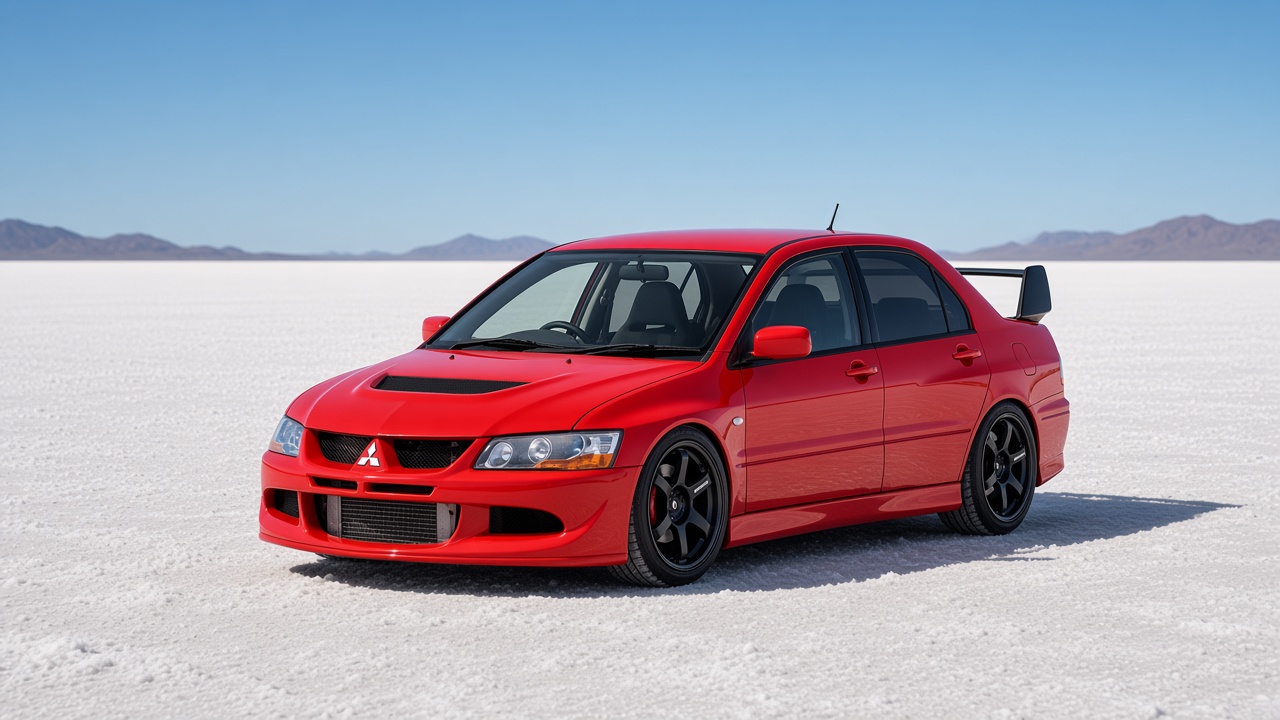
Quick answer: Australian Evo VIIIs (195kW, five-speed) and IXs (206kW, six-speed, MIVEC) run the iron-block 4G63. The Evo X (217kW) runs the alloy 4B11T with a five-speed manual or TC-SST twin-clutch. Check service history, AYC and ACD function, gearbox condition (SST clutch wear on the X, synchros on all), turbo health and tune paperwork. Get a compression test on any modified car.
Evo VIII, IX and X at a glance
| Model | Australian launch | Engine | Australian output | Gearbox |
|---|---|---|---|---|
| Evo VIII | June 2004 | 4G63 2.0 turbo | 195kW at 6000rpm, 355Nm at 3500rpm | 5-speed manual |
| Evo IX | August 2005 | 4G63 2.0 turbo with MIVEC | 206kW at 6000rpm, 355Nm at 3000rpm | 6-speed manual |
| Evo X | July 2008 | 4B11T 2.0 turbo, alloy block | 217kW at 6500rpm, 366Nm at 3500rpm | 5-speed manual or 6-speed TC-SST |
Evo X production ended in April 2016. The Australian Evo X launched in standard form, with an optional performance pack, and as the SST-equipped MR.
Australian-delivered vs import
Mitsubishi Australia sold Evos from the Evo VI in 2001, so there's a healthy pool of local cars with traceable histories. Japanese-market GSR, RS and MR versions, and the Evo IX wagon, are private imports. Specs vary: Japanese-market cars used systems like ACD and Super AYC depending on grade, and outputs were quoted at the 280PS industry cap.
Evo VIIIs built from 2003 won't pass 25 years old until 2028, so they don't yet fit the older vehicle import pathway. Imported Evos already here came in under earlier specialist import arrangements. Confirm the import approval, compliance or RAV entry, and rego history match the car.
What goes wrong
4G63 (Evo VIII and IX)
Tough engine, but now 20-plus years old and usually modified. Watch for tired turbos, oil leaks, worn timing belts (an overdue belt is a serious risk), and cooling issues on hard-driven cars.
AYC and ACD
The active yaw control and active centre diff use hydraulics and fluid that need servicing. Warning lights, inconsistent handling or a pump that runs constantly all need investigating. On the Evo X, the pump housing and gasket can corrode because of where the pump sits.
Gearboxes
- Evo VIII five-speed and IX six-speed: Check for crunching synchros, popping out of gear and diff whine. Launches and big torque take their toll.
- Evo X manual: Even gears and reverse can disappear, usually due to a selector fork problem. Billet forks are a common fix. Clutch master cylinders also fail.
- Evo X TC-SST: Clutch pack wear is the big one, often showing as slip when cold. A replacement or rebuild is expensive.
4B11T (Evo X)
Known items include fuel pump relays causing lean running, a vacuum return hose to the fuel pressure regulator popping off (often misdiagnosed as a MAF fault), snapped spark plug tips from lean running, hairline cracks in the cast exhaust manifold, and timing chain stretch on poorly serviced engines. Check all factory software updates have been done.
Suspension, brakes and body
Knocking dampers, worn bushings, expensive Brembo discs and pads, and paint that chips easily on the rear door corners and side skirts. Rust is more of a concern on imports from snowy regions.
Inspection checklist
- Service history. Oil changes, timing belt (4G63), AYC and ACD fluid, SST fluid and clutch work.
- PPSR and identity. PPSR check, VIN, compliance or RAV entry on imports.
- Cold start. Knocks, rattles, chain noise on the 4B11T, smoke.
- Smoke after idle. Idle then accelerate. Blue smoke means seals or rings.
- Compression test. Even across all four cylinders.
- Boost. Smooth and consistent. No spikes or creep.
- AYC and ACD. No warning lights. Handling consistent under load. Pump not running constantly.
- Gearbox. Every gear, hot and cold. On SST cars, drive from cold and watch for slip or flare on take-off and upshifts.
- Clutch. Slip test in a high gear at low revs.
- Diffs. Front, centre and rear. Whine, clunks or binding on tight turns.
- Brakes. Disc condition, pad thickness, pulsing.
- Body. Crash repairs, panel gaps, overspray, rust in arches and sills.
- Track history. Ask directly. Cars that have done motorsport need closer scrutiny.
A specialist pre-purchase inspection pays for itself on an Evo.
Modified examples: what to look for
The Evo tuning scene is deep, and stock cars are uncommon.
Common builds
- Exhaust, intake, front pipe and tune.
- Larger turbo, injectors and fuel pump upgrades.
- E85 tunes. See our E85 conversion guide.
- Forged engines for big power.
- Coilovers, brakes and wheels for track use.
Green flags
- Named tuner, dyno sheets and fuel type.
- Supporting upgrades that match the power: fuel, cooling, clutch.
- Upgraded SST clutches or a manual with billet forks on the Evo X.
- Receipts and original parts included.
Red flags
- Big power on a stock SST with no gearbox work.
- An off-the-shelf flash with no tuner named.
- AYC disabled with no explanation.
- Mods that need engineering with no certificate. See what mods need engineering.
Read how to tell a genuine build from a cheap one for more.
What drives value
We don't quote prices as fact. What moves the number:
- Generation. Evo VIII and IX cars with the 4G63 attract a strong following. The Evo X appeals as a more modern, usable car.
- Rare variants. MR models and limited editions tend to carry a premium.
- Gearbox. Manuals are generally more sought after. SST condition matters on MR cars.
- Originality. Unmodified, low-owner cars are increasingly scarce.
- Service history. Especially timing belts, AYC fluid and SST servicing.
- Build quality. A documented build can hold value. A cheap one usually doesn't. See do mods add value or kill it?
- Body condition. No crash or rally history, original paint.
Live listings are the best guide to where the market sits right now.
Evos for sale on Horsepower House
Browse every Mitsubishi Lancer Evolution for sale, or see the latest below.
Selling your Evo? List it free, no expiry.
List your car free. Never expires.
List your carRelated guides
Frequently asked questions
Which is better, the Evo IX or Evo X?
The Evo IX has the older, rawer 4G63 with MIVEC and a six-speed manual in Australian spec. The Evo X is more modern and more refined, with the alloy-block 4B11T and the choice of a five-speed manual or TC-SST twin-clutch. Buyers chasing the classic Evo feel tend to pick the IX.
How much power did the Australian Evo X make?
The Australian Evo X launched in July 2008 with 217kW at 6500rpm and 366Nm at 3500rpm from the 2.0-litre 4B11T turbo.
Is the Evo X SST gearbox reliable?
It can be, but clutch pack wear, often showing as slipping when cold, is a known issue and can be expensive. Check service history, ask about fluid changes and drive it from cold before buying.
What is the AYC pump and why does it fail?
The active yaw control system uses a hydraulic pump to vary torque across the rear axle. On the Evo X, the pump housing sits in an exposed spot and can corrode. Earlier Evos also need the AYC fluid and system checked.
Were Evos sold new in Australia?
Yes. Mitsubishi Australia sold the Evo VI from 2001, the Evo VIII from June 2004, the Evo IX from August 2005 and the Evo X from July 2008. Japanese-market GSR, RS and MR versions are private imports.